- May 28 Wed 2008 12:41
-
Serra (eina) Català www.tool-tool.com
- May 28 Wed 2008 12:33
-
العربي منشار www.tool-tool.com

- May 28 Wed 2008 11:10
-
Saw English www.tool-tool.com
Bewise Inc. www.tool-tool.com Reference source from the internet.

Back saw
Bow saw
Circular saw
Reciprocating saw
Band saw
- May 28 Wed 2008 11:02
-
Machinist www.tool-tool.com
- May 28 Wed 2008 10:04
-
Chemical Vapour Deposition (CVD) – An Introduction www.tool-tool.com
Bewise Inc. www.tool-tool.com Reference source from the internet.
Chemical Vapour Deposition (CVD) – An Introduction
Background
Chemical vapour deposition or CVD is a generic name for a group of processes that involve depositing a solid material from a gaseous phase and is similar in some respects to physical vapour deposition (PVD).
PVD differs in that the precursors are solid, with the material to be deposited being vaporised from a solid target and deposited onto the substrate.
Types of CVD Processes
CVD covers processes such as:
· Atmospheric Pressure Chemical Vapour Deposition (APCVD)
· Low Pressure Chemical Vapour Deposition (LPCVD)
· Metal-Organic Chemical Vapour Deposition (MOCVD)
· Plasma Assisted Chemical Vapour Deposition (PACVD) or Plasma Enhanced Chemical Vapour Deposition (PECVD)
· Laser Chemical Vapour Deposition (LCVD)
· Photochemical Vapour Deposition (PCVD)
· Chemical Vapour Infiltration (CVI)
· Chemical Beam Epitaxy (CBE)
How Does CVD Work?
Precursor gases (often diluted in carrier gases) are delivered into the reaction chamber at approximately ambient temperatures. As they pass over or come into contact with a heated substrate, they react or decompose forming a solid phase which and are deposited onto the substrate. The substrate temperature is critical and can influence what reactions will take place.
Coating Characteristics
CVD coatings are typically:
· Fine grained
· Impervious
· High purity
· Harder than similar materials produced using conventional ceramic fabrication processes
CVD coatings are usually only a few microns thick and are generally deposited at fairly slow rates, usually of the order of a few hundred microns per hour.
CVD Apparatus
A CVD apparatus will consist of several basic components:
· Gas delivery system – For the supply of precursors to the reactor chamber
· Reactor chamber – Chamber within which deposition takes place
· Substrate loading mechanism – A system for introducing and removing substrates, mandrels etc
· Energy source – Provide the energy/heat that is required to get the precursors to react/decompose.
· Vacuum system – A system for removal of all other gaseous species other than those required for the reaction/deposition.
· Exhaust system – System for removal of volatile by-products from the reaction chamber.
· Exhaust treatment systems – In some instances, exhaust gases may not be suitable for release into the atmosphere and may require treatment or conversion to safe/harmless compounds.
· Process control equipment – Gauges, controls etc to monitor process parameters such as pressure, temperature and time. Alarms and safety devices would also be included in this category.
Energy Sources
There are several suitable sources of heat for CVD processes. These include:
· Resistive Heating e.g. tube furnaces
· Radiant Heating e.g. halogen lamps
· Radio Frequency Heating e.g. induction heating
· Lasers
Other energy sources may include UV-visible light or lasers as a source of photo energy.
Precursors
Materials are deposited from the gaseous state during CVD. Thus precursors for CVD processes must be volatile, but at the same time stable enough to be able to be delivered to the reactor.
Generally precursor compounds will only provide a single element to the deposited material, with others being volatilised during the CVD process. However sometimes precursors may provide more than one. Such materials simplify the delivery system, as they reduce the number of reactants required to produce a given compound.
Typical Precursor Materials
CVD precursor materials fall into a number of categories such as:
· Halides - TiCl4, TaCl5, WF6, etc
· Hydrides - SiH4, GeH4, AlH3(NMe3)2, NH3, etc
· Metal Organic Compounds –
· Metal Alkyls - AlMe3, Ti(CH2tBu)4, etc
· Metal Alkoxides - Ti(OiPr)4, etc
· Metal Dialylamides - Ti(NMe2)4, etc
· Metal Diketonates - Cu(acac)2, etc
· Metal Carbonyls - Ni(CO)4, etc
· Others – include a range of other metal organic compounds, complexes and ligands.
Materials That Can be Produced by CVD Processes
CVD is an extremely versatile process that can be used to process almost any metallic or ceramic compound. Some of these include:
· Elements
· Metals and alloys
· Carbides
· Nitrides
· Borides
· Oxides
· Intermetallic compounds
CVD Gas Products
An often neglected by-product of the CVD process are volatile gases. However, these gases may be toxic, flammable or corrosive so must be treated appropriately.
Analysis of the off-gases can also lead to a better understanding of the CVD reaction mechanisms and the information used to refine the process.
Applications
CVD has applications across a wide range of industries such as:
· Coatings – Coatings for a variety of applications such as wear resistance, corrosion resistance, high temperature protection, erosion protection and combinations thereof.
· Semiconductors and related devices – Integrated circuits, sensors and optoelectronic devices
· Dense structural parts – CVD can be used to produce components that are difficult or uneconomical to produce using conventional fabrication techniques. Dense parts produced via CVD are generally thin walled and maybe deposited onto a mandrel or former.
· Optical Fibres – For telecommunications.
· Composites – Preforms can be infiltrated using CVD techniques to produce ceramic matrix composites such as carbon-carbon, carbon-silicon carbide and silicon carbide-silicon carbide composites. This process is sometimes called chemical vapour infiltration or CVI.
· Powder production – Production of novel powders and fibres
· Catalysts
· Nanomachines
- May 27 Tue 2008 19:33
-
Wrightspeed SR-71,百公里加速2.5秒的電力車!www.beeway.com.tw
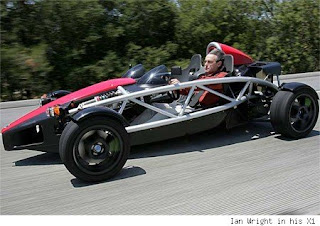
大家都還記得這款跑車吧,
前 Cisco / DEC 的工程師設計的 Wrightspeed X1 電動賽車,
可以讓許多量產車型汗顏的跑車,
包括Ferrari 360 Spyder 和 Porsche Carerra GT。
現在它又來了,這款SR-71型號,
電力驅動,百公里加速只需要2.5秒,
真的是會讓你大腦瞬間一片空白,
最新的車型要等18個月才能見到,
而獲 得法律授權上路需要36個月,
雖然是個漫長的等待,
不過也值得擁有啊,
比起昂貴的Bugatti EV,
這個可便宜多了。
[資料來源]
- May 27 Tue 2008 19:29
-
aTV Flash 正式推出!隨插即用的 USB 駭 Apple TV 利器!www.beeway.com.tw

幾乎可以說是史上被玩最兇的蘋果產品之一,
Apple TV 現在終於是可以輕鬆駭到最高點囉!
有了 aTV Flash 這個偽裝成 USB 隨身碟
( 事實上他就是一個隨身碟 ) 的小玩意,
只要將他插上 Apple TV 背後的 USB 連接埠,
沒錯!據說就是這麼容易;插上以後,
他就會開始自動安裝那些過去您曾經聽過、
但又不敢輕易將 Apple TV 開腸剖肚駭一下的新功能。
包括原先不支援的檔案格式 ( DivX, Xvid, AVI, WMV, RMVB...等 ) 、
直接撥放 DVD 格式檔案卻省下轉檔的麻煩、
從非 iTunes 資料庫檔案夾中存取影片、
透過 Safari 架構打造的瀏覽器逛網路...等等眾多功能,
另外原先 Apple TV 上面的東西,
也都能夠完完整整的保留,
同時不論是新舊 Apple TV 韌體都適用。 ( 包括 Take 2 )
不過這麼多好康的代價可是不便宜,要 59.95 美元。話說有人要團購嗎?
[資料來源]
- May 27 Tue 2008 19:24
-
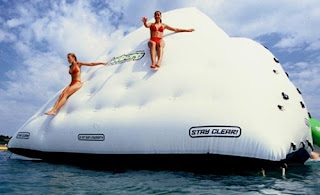
今年夏天,你需要這個水上登山充氣模!www.beeway.com.tw
- May 27 Tue 2008 18:53
-
EarthLED EvoLux R LED 燈泡,讓你要多亮就有多亮!www.beeway.com.tw
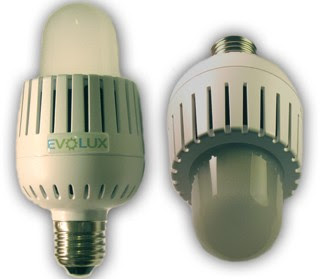
標題是不實廣告。
不過 Advanced Lumonics 也沒有這樣說過,是小編亂加的 XC
是降的!他們家最新主打的 LED 燈泡,
EarthLED EvoLux R,
其中一個最大的買點就是可以調整燈泡亮度的 EvoDim 功能;依當時使用需求,
使用者可以從 250、750、950 流明三種亮度裡頭,
選一個你最愛的;這顆號稱全世界最聰明的燈泡 ,
還能夠以 13 瓦的低功率,
得到跟耗電功率在 100 瓦的一般燈泡的光亮。
不 過一顆的售價,可是給他有貴到的貴的 100 美元,不過換算省下的電費,據說一顆燈泡一年基本上花不到 6 美元 ( 每天十二小時,每度電 0.1 美元 ) 的電費,應該還算划算;另外如果您不需要那個 EvoDim 功能,也可以考慮陽春版的 EarthLED EvoLux R,只要 80 美元...
[原文連結]
- May 27 Tue 2008 11:07
-
ドリル (工具) 日本語 www.tool-tool.com

- May 26 Mon 2008 20:07
-
Drill English www.tool-tool.com

- May 26 Mon 2008 19:24
-
工作機械 日本語 www.tool-tool.com

Bewise Inc. www.tool-tool.com Reference source from the internet.A machine tool is a powered mechanical device, typically used to fabricate metal components of machines by machining, which is the selective removal of metal. The term machine tool is usually reserved for tools that used a power source other than human movement, but they can be powered by people if appropriately set up. Many historians of technology consider that the true machine tools were born when direct human involvement was removed from the shaping or stamping process of the different kinds of tools. For instance, they consider that lathe machine tools were invented around 1751 by Jacques de Vaucanson because he was the first to mount the cutting instrument on a mechanically adjustable head, taking it out of the hands of the operator.
